Terry Hall and The Specials were more than just music and aesthetics, the band was a symbiosis of youth culture, protest and a living counter-model to Thatcher's neoliberal and divided Britain.
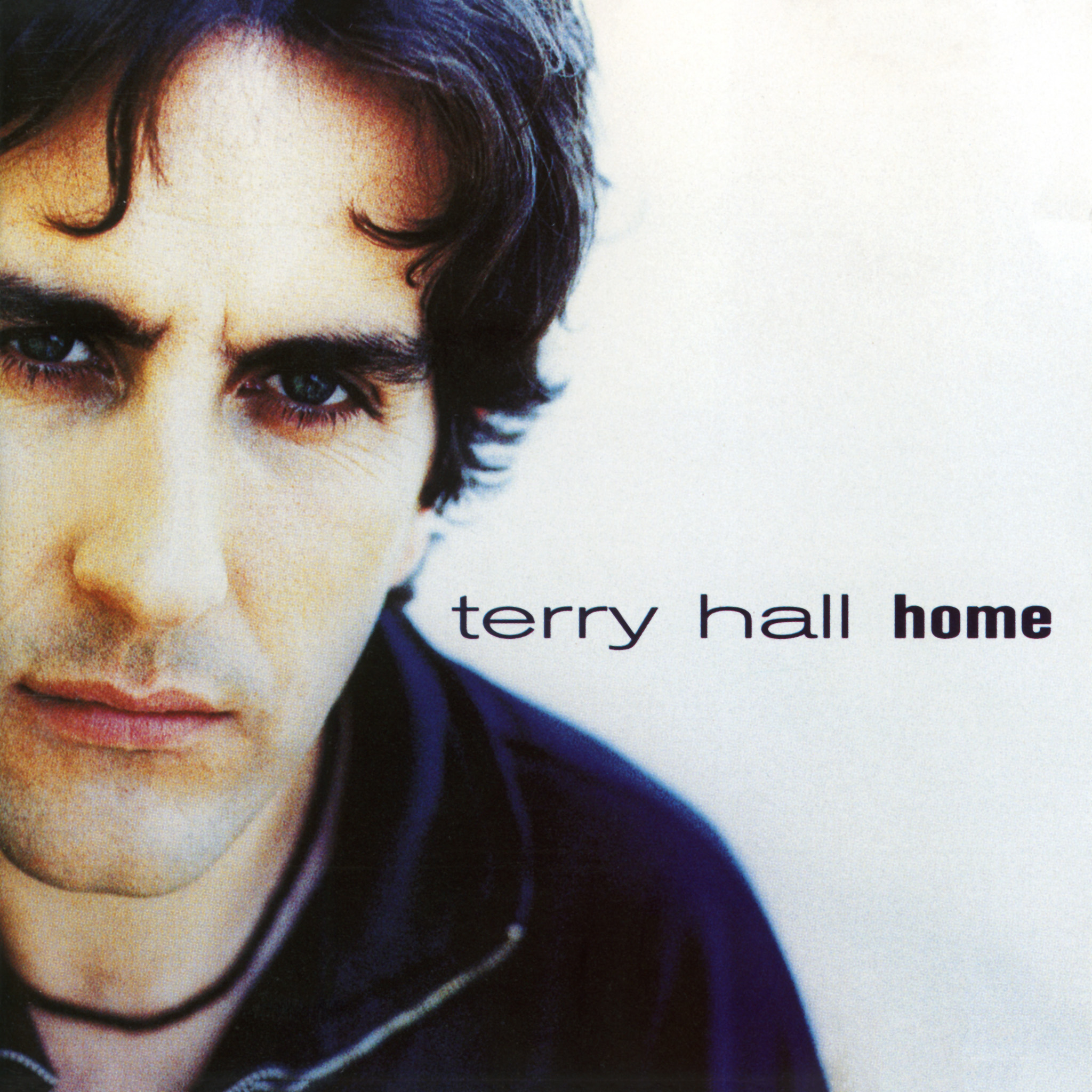
Last Sunday (18 December 2023), the algorithm behind Google News, driven by its almost uncanny knowledge of what might ‘interest’ me, threw it in my face: Terry Hall had died completely unexpectedly at the age of 63 after a short and serious illness. He was one of the few people I would have loved to meet in person during his lifetime, even though I'm not generally susceptible to celebrity culture. The slim man at the microphone with the always slightly sad-looking face had left us.
In 1979, when it all began for me, I was glued to the radio from morning till night, tuned to the only station I listened to because it played music from the country where my heroes came from, because once (or several times? I can't remember) a week John Peel played records on it, because they spoke English on it, which I desperately wanted to learn to understand. So the British Army, which maintained a large military training area a few kilometres away and rumbled through our village every few months with its tanks, ruining the pavements, became my secret ally, because it had the British Forces Broadcasting Service – BFBS for short.
At that time, I discovered sounds that were completely new to me: similar to reggae (I was already familiar with Bob Marley), but more hectic, faster and louder. The first band that was played there repeatedly was The Specials, and – without understanding their lyrics, my English wasn't good enough for that at the time – I liked what I heard. Musical styles came and went, and so this band also slipped out of focus – there was still so much to discover. I heard them again purely by chance in 1988 on the island of Naxos in the bar ‘Paradiso’, where an Irishman who had somehow ended up there was DJing:
I knew that from somewhere. It grooved well. Back home, I went to Schaulandt again, and the band's two albums – Specials and More Specials – ended up on the turntable. But none of that explains why this band, and Terry Hall in particular, who we're talking about today, was so important.
A traumatic start to life
Terry Hall, born in 1959, grew up in the industrial city of Coventry, a city of many immigrants, a large proportion of whom from Jamaica. His parents were working class, his father a heavy drinker. He was a multi-talented child, showed great talent at football and was even invited into the West Bromwich Albion youth system, but his parents forbade it wanting to avoid all the travelling involved. Due to his good grades, a grammar school nearby offered him a place, but his parents refused because they considered the expense of books and school uniforms a waste.

At the age of 12, Terry was abducted and sold to a paedophile ring in France. How he eventually managed to escape from there is unknown, but he suffered the consequences of this experience for the rest of his life. At the time, there were no appropriate treatment methods for cases like his, so he was given Valium, to which he eventually became addicted. From then on, he lived with manic depressive episodes, which ultimately culminated in a failed suicide attempt in 2014. It should be mentioned at this point that it was only then that he began proper therapy and – after his experience with Valium, always fearful of becoming addicted again – ultimately agreed to be treated with appropriate medication.
He left school at the age of 15 and began to scrape by with low-paid jobs. He used his meagre earnings to buy records and began to develop a desire to become a musician himself. In 1977, Terry joined the band Coventry Automatics as a singer, which shortly afterwards renamed itself The Specials – and history took its course.
Coventry, the 1970s and ska
The 1970s, precisely the period in which he came of age, were dramatic times for Great Britain. Economically, the country was in decline, marked by constant labour disputes and increasingly aggressive social tensions, which increasingly focused on immigrants from the former colonies. The National Front, with its racist ideology, found not only more supporters, but also more brutal ones. Immigrants demanded their rights, but also experienced oppression from an overwhelmed state, which increasingly escalated into violence on the streets.
Coventry, Terry's hometown, was directly affected as an industrial city. Nevertheless, he himself, like many of his friends, came from a milieu where the children of English and immigrant parents grew up together and felt they had more in common than differences. As one of the band members later explained in an interview when asked about black and white people living together, it wasn't a question at all – these were just your mates you grew up with.
It was this mix that The Specials used to develop their very own interpretation of ska – Jamaican rhythms combined with the tempo and direct energy of punk. But it wasn't just about being danceable; from the very beginning, the band wanted to convey a message and take a stand against all the hatred and tension in their environment.
2-Tone Records and success
Two things went hand in hand with the band: the 2-Tone Records label, founded by keyboarder Jerry Dammers, and the band's outfits, designed by Terry Hall and based on second-hand suits from the 1960s and pork pie hats. These were also reflected in the label's logo, drawn by Terry:

The first album, Specials, was released in 1979 and became influential for the genre: it contained a mixture of cover versions and original compositions, many of which later became hits in their own right. Critics gave it mostly positive reviews, but above all it contributed to the rapidly growing cult following around the band. The band's first hit single was Gangsters:
In addition to The Specials, other ska bands also appeared on 2-Tone, such as The Selecter with their charismatic singer Pauline Black, also from Coventry, and Madness, who had developed a very similar style, both musically and visually, in London without any connection to the scene in Coventry.
Ska as a political statement
Unlike some other ska bands at the time, however, music was always more than just entertainment for The Specials. True to the motto ‘with my mates’, the band consisted of black and white members, which was quite unusual at the time; Terry Hall and Neville Staple shared the frontman role in exactly this colour contrast, and the black and white check pattern of the label was also part of the programme here. The lyrics of the songs, mostly written by Hall and Dammers, were inspired by the social tensions of their time, the brutalisation of society and, increasingly, the divisive neoliberal policies of Margaret Thatcher's Tories, who had become Prime Minister in May 1979.
The threat posed by racist thugs was addressed in Concrete Jungle:
I'm going out tonightI don't know if I'll be alrightEveryone wants to hurt meBaby danger in the city
I have to carry a knifeBecause there's people threatening my lifeI can't dress just the way I wantI'm being chased by the national front
Concrete jungle, animals are after meConcrete jungle, it ain't safe on the streetsConcrete jungle, glad I got my mates with me
I won't fight for a causeDon't want to change the lawLeave me alone, just leave me aloneI want to get out on my own
I'm walking home tonightI only walk where there's lots of lightsIn the alleys and the doorwaysSome throw a bottle right in your face
Concrete jungle, animals are after meConcrete jungle, it ain't safe on the streetsConcrete jungle, glad I got my mates with me
I'm walking home tonightI only walk where there's lots of lightsIn the alleys and the doorwaysSome throw a bottle right in your face
I won't fight for a causeI don't want to change the lawLeave me alone, just leave me aloneI want to get out on my own
Concrete jungle, animals are after meConcrete jungle, it ain't safe on the streetsConcrete jungle, glad I got my mates with me
Another important song from the first album was ‘Too Much, Too Young’ (the BBC's obituary for Terry Hall features a picture from Coventry showing a sign with the words "Too Much Too Young - RIP Terry Hall 1959 - 2022" displayed), in which the band addresses the problem of early unwanted pregnancies, particularly among the underclass, in an original but very clear way:
You've done too much,Much too youngNow you're married with a kidWhen you could be having fun with me
Oh no, no gimme no more pickni
You've done too much,Much too youngNow you're married with a sonWhen you should be having fun with me
We don't want, we don't wantWe don't want no more pickni
Ain't he cute?No he ain'tHe's just another burdenOn the welfare state
You've done too much,Much too youngNow you're married with a kidWhen you could be having fun with me
No gimme, no gimme,No gimme no more pickni
Call me immatureCall me a poserI'd love to spread manure in your bed of rosesDon't want to be richDon't want to be famousBut I'd really hate to have the same name as you(You silly moo)
You've done too much,Much too youngNow you're married with a kidWhen you could be having fun with me
Gi we de birth control, we no want no pickni
You've done too much,Much too youngNow you're chained to the cookerMaking currant buns for tea
Oh no, no gimme no more pickni
Ain't you heard of the starving millionsAin't you heard of contraceptionDo you really a program of sterilizationTake control of the population boomIt's in your living roomKeep a generation gapTry wearing a cap!
After the success of their first album, the band toured extensively, to the point where they were exhausted, and in 1980 their second album was released. As expected, the new Tory government added fuel to the already blazing fire of social unrest, making the musicians' attitude and lyrics increasingly iconic symbols of protest. Worth listening to from ‘More Specials’ is ‘Rat Race’, which was about privileged students who then, as a matter of course, expected a career in the system and a life of prosperity:
Incidentally, this song can also be heard in the intro to Dexys Midnight Runners' debut album, which I wrote about in ‘Northern Soul’.
Break-up and late reissue
The band's greatest success was also its demise. Ghost Town, a bitter commentary on the state of British society at the time, is considered by many to be The Specials' finest work, but it broke new ground stylistically, moving away from ska. The single was a huge hit, but the band members were exhausted from touring, couldn't stand each other anymore, and didn't all agree with the new musical language Jerry Dammers was pushing. After their appearance on ‘Top of the Pops,’ Staple, Hall, and Golding announced their departure from the band. Ghost Town is different, but definitely worth listening to.
This town (town) is coming like a ghost townAll the clubs have been closed downThis place (town) is coming like a ghost townBands won't play no moreToo much fighting on the dance floor
Do you remember the good old days before the ghost town?We danced and sang, and the music played in a de boomtown
This town (town) is coming like a ghost townWhy must the youth fight against themselves?Government leaving the youth on the shelfThis place (town) is coming like a ghost townNo job to be found in this countryCan't go on no moreThe people getting angry
This town is coming like a ghost townThis town is coming like a ghost townThis town is coming like a ghost townThis town is coming like a ghost town
Several line-up changes followed, but without the two frontmen, the band was unable to repeat its former successes.
In 2008, Terry Hall managed to get most of the original band members – except Jerry Dammers – to reunite, and in the years that followed until Hall's death, this line-up performed again under the name ‘The Specials’. Here we see ‘A Message to You, Rudy’ once more, but now many years later and live on Later with Jools Holland:
Terry continued working as a musician until the end and had even been on tour with the band in 2022. His face represents a band that not only shaped the musical style of its era, but also, through its advocacy for justice and against racism and violence, formed a living counter-model to the beginning of the Thatcher era.
His death, which came as a surprise to us all, leaves us, his fans, old and young, shocked and saddened.
See you on the other side, Terry!
This article has been translated from German language. It was first published in the Freitag Community, later in this very blog: See you on the other side, Terry.
Post scriptum: additional links:
- Interview with Terry Hall, in which he discusses the 2Tone era and the period that followed: Terry Hall - Talks about The Specials, Mental Health, Equality & more - Radio Broadcast 05/03/2019
- Pauline Black, singer of "The Selecter", with an obituary for Terry Hall: Terry Hall united black and white just as Stormzy does now. Music needs their ‘better vision’
- Film The Specials - Too Much Too Young Documentary
- Good live recording: The Specials live in Japan 1980 HQ
- The legendary music film featuring the 2Tone bands from 1981: Dance Craze 1981 film the British 2 Tone music The Specials The Beat Body Snatchers Madness Selecter
- Film Two-Tone and Ska’s HUGE Influence on Music

Keine Kommentare :
Kommentar veröffentlichen